


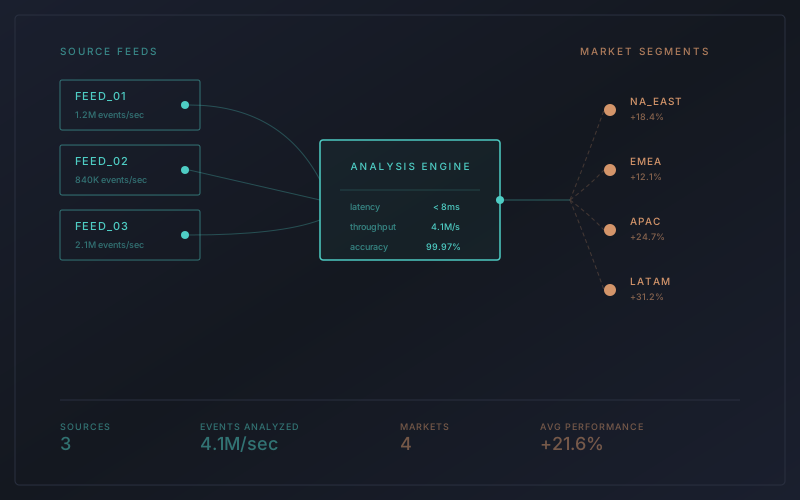
In traditional market engagement, data followed the interaction. You captured a lead, then analyzed its value in a post-mortem environment. This "lag-time" analysis often resulted in operational bottlenecks where internal teams were forced to triage low-quality demand manually. Now, data is baked into the beginning of the boundary. With machine learning and automated routing logic, organizations can simulate demand outcomes, stress-test eligibility hypotheses, and refine entry models before a single internal resource is touched.
Discovery is no longer linear—it is iterative, intelligent, and governed at the edge. High-volume markets generate vast, complex datasets that describe consumer intent at its most fundamental layers. ADK’s systems turn that data into dynamic oversight—predicting routing behavior, modeling eligibility pathways, or even designing new engagement components. We are not just interpreting the market; we are building the scaffolding that speaks its language.
Organizational capability doesn't exist in isolation—it’s embedded in systems: legal frameworks, insurance environments, and operational back-ends. Data allows us to understand those systems with extraordinary granularity. From regional networks to national intake centers, we can now diagnose systemic inefficiencies, model routing solutions, and implement change with precision.
We are approaching a point where data doesn’t just inform decisions—it actively shapes outcomes. It enables personalized engagement pathways, real-time eligibility diagnostics, and adaptive systems that respond to market behavior. The question is no longer "How much volume can we get?"—it is "How will we choose to structure what arrives?"
"We have gone from decoding market demand to designing the systems that govern it—and data is the scaffolding holding that operational future together."
To maintain structural clarity, inbound demand is not treated as a monolith. Instead, it is categorized by its origin and historical reliability to ensure the routing logic remains defensible.
Scientific progress in market systems is no longer confined to internal strategy meetings. It is embedded in code, in infrastructure, and in intelligent systems that can learn, adapt, and improve without direct intervention. We have moved from observing market reality to orchestrating it. Logic models can simulate routing outcomes before system integration begins, compressing what once took months of manual triage into seconds. This shift doesn’t just increase speed—it alters the nature of organizational scale itself.
We measure the effectiveness of our engagement frameworks using clinical markers of system health:
That scaffolding is already supporting some of the most advanced breakthroughs in organizational health and capability. These aren't speculative ideas; they are active systems in motion, rewriting the rules of what is operationally possible:
When a specific source demonstrates performance drift, the system does not wait for a human audit. The following refinement logic is applied autonomously to preserve system integrity:

.png)